
A top leader of the Communist Party of China has called for undertaking reforms in Tibetan Buddhist monasteries by appointing monks and nuns who are 'politically reliable' hinting at an apparent purge in the clergy.
China has said that its doors are open for talks with Tibetan spiritual leader, the Dalai Lama, but reiterated that no concessions would be made on issues concerning national sovereignty.

Statements emanating from the recent Chinese Communist party congress suggest potentially increasing pressure on India with regard to the Dalai Lama and the Central Tibetan Administration in Dharamsala, notes former RAW officer Jayadeva Ranade.
China on Monday denied that the Karmapa, head of the Tibetan Karma Kagyu sect, was its spy, and claimed that allegations against the country in this regard showed India's 'mistrustful attitude' towards Beijing. "The speculation by India's media, regarding the matter of the Karmapa as a Chinese agent or spy, shows that India is maintaining its mistrustful attitude toward China," said Xu Zhitao, an official at the United Front Work Department of the ruling Communist Party.
Rebuffing the Dalai Lama's remarks that there were "encouraging signs" about China changing its attitude towards Tibet, a top Chinese official has said there would be no breakthrough in talks until the Tibetan spiritual leader changed his stand on "some fundamental issues".
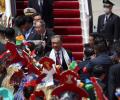
Wang Yang and Xi Jinping's visits signal the beginning of a major Chinese push to bring about a transformation of Tibet, observes Jayadeva Ranade, the distinguished China expert and retired RA&W officer.
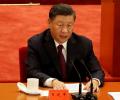
India, Taiwan and countries with large numbers of Tibetans, Uyghurs and overseas Chinese will be prominent among those that witness elevated United Front activity, notes Jayadeva Ranade, the distinguished China expert and retired RAW officer.

The Chinese Communist party has not closed its door of contacts and negotiation with the Dalai Lama, a senior Communist leader wrote recently. Former RA&W officer and China expert Jayadeva Ranade explains what the thinking on Tibet is likely in Beijing.
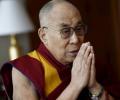
The chairman of the organising committee Karma Gelek Yuthok said almost 7,000 pilgrims had returned to China, citing pressure from authorities there, the Global Times report said.

'This allows opportunities for (Chinese) entry into the domestic politics of Nepal, something that is also encouraged by Nepali politicians's willingness to play the China card (vis-a-vis India).'
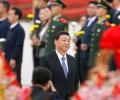
Wang Junzheng, Tibet's new Communist party boss, is on a number of sanctions lists by the US, Britain, the EU and Canada, for his tough role in Xinjiang, aimed at China's Uyghur ethnic minority, observes Jayadeva Ranade, the retired senior RA&W officer and distinguished China expert.

'Clarifying that modernisation of national defence and armed forces should be completed by 2035, Xi Jinping asserted the goal is to make the People's Liberation Army a "world class force" that "can fight and win" by 2050,' points out former RAW officer Jayadeva Ranade.

Samdong Rimpoche's visit to China materialised against the backdrop of strained India-China relations consequent to the face-off between Indian and Chinese troops at Doklam, says former RAW officer Jayadeva Ranade.

With his eye on next year's Party Congress, Xi Jinping is using the CCP's centenary celebrations to publicise the benefits for China from its leadership, and boost his image and contribution to China's rise, observes Jayadeva Ranade, the distinguished China expert and retired RA&W officer.

What was the need for Xi Jinping, general secretary of the Chinese Communist Party, President of the People's Republic of China and Chairman, Central Military Commission, to don the new role of Commander in-Chief? Does this mean that the most powerful Chinese leader since Mao faces numerous threats from within the Communist Party?

'He still has to deal with party norms and traditions and has been careful to follow the order of seniority,' points out Claude Arpi.

Communist China has recently developed a great expertise in 'soul reincarnation', feels Claude Arpi

Will China's new military reforms endanger Xi Jinping's rule?

'India need to look beyond the economic prism.' 'China had no qualms in taking the Kashmir issue to the UN Security Council last year -- not once, but thrice -- thus violating Indian sensitivities,' observes China expert Srikanth Kondapalli.

To rise quickly in the PLA's hierarchy, you need to be close to Xi Jinping. Retired RA&W officer Jayadeva Ranade on the changes in China's military leadership.

'Tibetans will participate in future conflicts with India (in all probability, some were already present in Galwan).' 'As nobody in India would like to have a deadly fight with Tibetan soldiers and officers, the issue needs to be closely followed,' observes Claude Arpi.

'The choice of Dhoka La for the intrusion by Chinese troops is significant and suggests a twin objective of pressuring Thimpu to allow Beijing to establish an embassy there and reinforcing Chinese claims on Arunachal Pradesh,' warns former RA&W officer Jayadev Ranade.
China has been trying to build lobbies of influence and mould public opinion in India since at least 2017, and large sums have been invested in the effort, reveals former RA&W officer Jayadeva Ranade.
Xi ordered country's 2.3 million-strong military to be absolutely loyal to the party, to focus on how to win in wars, to pioneer reforms and innovation, to scientifically manage commanding a unit, to lead troops in accordance with the strictest standards and to take the forefront in complying with laws and regulations.
The first priority for the new Tibetan administration in Dharamsala should be to look at Tibetan recruitment in the PLA, suggests Claude Arpi.
China has been keeping tabs on the restive Tibet province through a 'grid' system and some 600 'convenience police posts' armed with high-tech equipment that monitor the daily life of the citizens of Lhasa and other Tibetan towns. Worse, 'volunteer security groups' known as 'Red Armband Patrols' are roaming around in order to get more information and 'classify' each and every citizen, says Claude Arpi
 © 2026 Rediff.com - Advertise with us - Disclaimer - Privacy Policy - Sitemap - Feedback - About us - Terms of use - Grievances